
22 Jul Patrick Henry & The Great Christian Divide
 Any series on the Founding Fathers Religion would be remiss without addressing the topic of slavery. For us today it seems amazing that such enlightened men, who demanded liberty and freedom for themselves, couldn’t see the hypocrisy in keeping slaves. But many of the Founding Fathers did clearly see the evil of the slave trade and bore no illusions as to themselves being masters over another race.
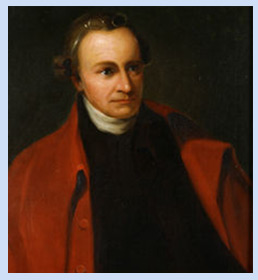
For some perspective on this matter, we turn to Patrick Henry, the former governor of Virginia, who is famously remembered for his “Give me Liberty, or give me Death!” speech, which was a call to arms against the oppressive British government. The following passage from Patrick Henry is taken from a letter to a friend who had sent him a book condemning the slave trade. What is especially poignant in this commentary (for the modern reader) is Henry’s observation of the great divide that exists between what Christians know is wrong in their heads, and what they actually reject as wrong in real life. It is great chasm that still exists today, even among Progressive Christians.
I take this opportunity to acknowledge the receipt of Anthony Benezet’s book against the slave trade. I thank you for it. It is not a little surprising that the professors of Christianity, whose chief excellence consists in softening the human heart, and in cherishing and improving its finer feelings, should encourage a practice so totally repugnant to the first impressions of right and wrong.
What adds to the wonder is that this abominable practice has been introduced in the most enlightened ages. Times that seem to have pretensions to boast of high improvements in the arts and sciences, and refined morality have brought into general use, and guarded by many laws, a species of violence and tyranny, which our more rude and barbarous, but more honest ancestors detested.
Is it not amazing that at a time when the rights of humanity are defined and understood with precision in a country, above all others, fond of liberty, that in such an age and in such a country, we find men professing a religion the most humane, mild, gentle and generous, adopting a principle as repugnant to humanity, as it is inconsistent with the bible, and destructive to liberty? Every thinking, honest person rejects slavery in theory, yet how few in reject it in real life from conscientious motives!1
- The above passage from Patrick Henry was edited lightly to make it easier to read by the modern reader. [↩]