
11 Mar Albert Camus & Common Decency
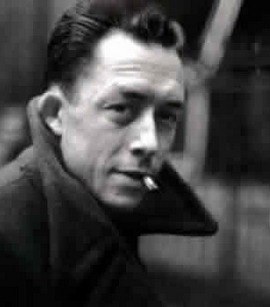 In Albert Camus’ novel The Plague, there is a curious character named Tarrou who organizes the volunteer sanitary teams in the city of Oran, a town afflicted by the bubonic plague. He also assists the lead doctor in his rounds helping patients. Tarrou does this for no other reason he says than his code of morals, which he defines as “common decency“.
A little bit later in the book, though, he mentions to the doctor that he is driven by the desire to become a saint. The doctor is shocked by this pronouncement and replies, “But you don’t believe in God.”
To which Tarrou replies, “Exactly! Can one be a saint without God?”
No answer is explicitly provided by Camus or his characters, but on finishing the novel the reader has the feeling that indeed one can become a saint without God. But how can this be if we hold to the belief that God and sainthood are inextricably linked? The idea that an atheist can become a saint will sound absurd to many Catholics and Christians.
The answer lies in a saying that the renowned psychologist Carl Jung had engraved above the front door of his home and on his tombstone: Vocatus atque non vocatus deus aderit. These Latin words are derived from the oracle of Delphi and translate to, “Invoked or not invoked, God is present.” Or what we might paraphrase enigmatically as, “With or without God, the Christ is present.”
Progressive Christians would be wise to take this message to heart, spending less time looking back toward scripture or forward towards heaven, and spending more time looking directly at ourselves and our neighbors, working with our daily bread in a spirit of righteousness (aka common decency) as we joyfully seek the Kingdom at hand.1
If we do that everything else will be added to us and fall into place, including the recognition that God has been with us all along, providing us with what we’ve needed to grow, whether we’ve asked for it or not.
——
To read about William Blake, poetry, and the power (or lack thereof) of words, please go to: Heaven in a Wildflower.
Gain fresh insight into the Lord’s Prayer. Read our free online book The Lord’s Prayer for Daily Life. The prayer’s hidden teachings will enrich and inspire you. Click the following link to begin reading the Living Hour book now: The Lord’s Prayer.
- “All these are the things for which the nations are seeking, and your heavenly Father knows that you need them all. But first seek his kingdom and the righteousness that he requires, and then all these things shall be added for you. Therefore do not be anxious about tomorrow, for tomorrow will bring its own anxieties. Every day has trouble enough of its own.” – Matt 6:32-34 [↩]