
Founding Fathers Religious Beliefs
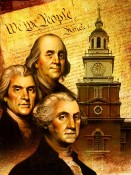 The Founding Fathers of the United States are often referred to as a mixture of anti-clerical Christians (i.e. religious free-thinkers) and deists. In many ways, we might think of them all as laying the groundwork for what is now referred to as the Progressive Christianity movement—for they were leaders who possessed a solid sense of reason that was guided by an understanding of the divine nature of creation and their place in it. As such, they strongly demonstrated all the characteristics of…
Benjamin Franklin’s Religion
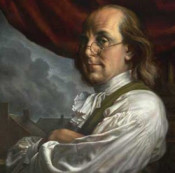 Continuing with our series on the Founding Fathers Religion and their reflections on God and Christianity, we move today to some commentary from that Progressive Christian Benjamin Franklin. The following passage is taken from a letter Franklin wrote to the reverend Ezra Stile in 1790, when Franklin was 84 years old, and Stile was serving as president of Yale College. Here we find Franklin discussing his perspectives on religion and the significance of Jesus of Nazareth…
Patrick Henry & The Great Christian Divide
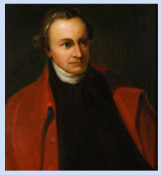 Any series on the Founding Fathers Religion would be remiss without addressing the topic of slavery. For us today it seems amazing that such enlightened men, who demanded liberty and freedom for themselves, couldn’t see the hypocrisy in keeping slaves. But many of the Founding Fathers did clearly see the evil of the slave trade and bore no illusions as to themselves being masters over another race. For some perspective on this matter, we turn to Patrick Henry, the former governor of Virginia, who is famously remembered for his “Give me Liberty, or give me Death!” speech…
William Penn’s Spiritual Advice
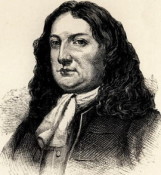 Before the likes of Jefferson, Washington, Franklin, and Adams, we had William Penn, the founder of Pennsylvania who is rightly considered by many to be America’s first Founding Father. A champion of religious freedom and democracy, Penn stands out among many early American settlers in his good relations and treaties with native-Americans. A Quaker (the Religious Society of Friends), William Penn was good friends with George Fox, the founder of the Quakers and like Fox, Penn combined a refined spiritual outlook with practical sensibilities. In the following passages, we find Penn offering sound advice to…
John Dickinson & Divine Providence
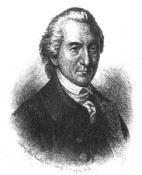 In this installment of our series on the religion of the America’s Founding Fathers and Progressive Christianity, we turn to John Dickinson, a less widely-known Father from Philadelphia, who fought during the American Revolution and served as a Pennsylvania delegate to the First Continental Congress in 1774 and the U.S. Constitutional Convention of 1787. Dickinson is perhaps most famous for his declaration to King George III that Americans were resolved to die free men rather than live slaves…
Thomas Paine & Christianity
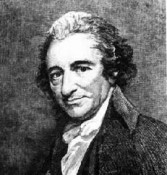 This week in our special series on the Founding Fathers Religion, we begin with the revolutionary Thomas Paine, a statesman who often was ostracized for his SBNR (Spiritual But Not Religious) views on Christianity, God, and religion. Like a true Progressive Christian, Paine tried to encourage forward progress in all aspects of the individual life and the life of the nation. His work The Rights of Man remains a testament to his enlightened perspective on the nature of public rights versus those of a government…
Thomas Jefferson on Jesus of Nazareth
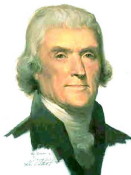 This week in our special series on the Founding Fathers Religion, we return to Thomas Jefferson, who likely wrote more on the subjects of God, Christianity, and Religion than any of the other Americans we attribute “founding father” status. Indeed Jefferson went so far as to famously write The Jefferson Bible (The Life and Morals of Jesus of Nazareth) in an attempt to clear up many of the misconceptions he felt surrounded the Nazarene and were being promulgated by the Church. As such, Thomas Jefferson might genuinely be considered the most important figure of Progressive Christianity in early America….
James Madison & The Christian Clergy
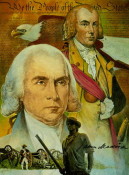 Today in our faith and religion series on America’s Founding Fathers, we take a look at James Madison, the 4th President of the United States, who is widely recognized as being the “Father of the Constitution.” Madison was a strong advocate of limited federal power, and a vigorous defender of the separation between Church and State. An Episcopalian, Madison always took a reasonable and measured approach to the subject of religion. Whether or not he might be described as a “deist” is open to debate, and, in the end, an inconsequential point. His bona fides as a Progressive Christian are unimpeachable. The following passage is…
John Adams & The Character of Literary Men
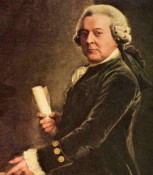 Among the most influential Founding Fathers of the United States is John Adams, our second president and the revolutionary delegate who was instrumental in persuading Congress to adopt the United States’ Declaration of Independence in 1776. A Unitarian Progressive Christian, Adams was well familiar with the abuses to which Christianity was subject, yet he kept an abiding faith in religion’s positive role of uniting and morally guiding the American people. This does not mean though that Adams felt government should in any way be involved in religion…
James Wilson & The American Character
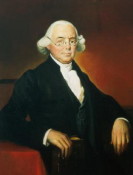 One of our relatively forgotten Founding Fathers is James Wilson, a signatory of The Declaration of Independence, a member of the Continental Congress, and among the first six Supreme Court justices chosen by President George Washington. One the most prominent lawyers of his time, Wilson is often credited as being the most learned of the Framers of the Constitution. James Wilson was also someone who fretted over the youth of America and strongly advocated teaching young children the principles of liberty, freedom, and justice which inspired the American Revolution…
George Washington & Spiritual Tyranny
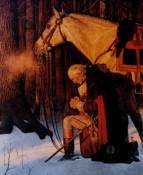 As we begin the final week of our month-long series on the Founding Fathers, Spirituality, and Religion, we turn our attention to George Washington, the commander of the Continental Army during the Revolutionary War, and of course the first President of The United States. A fierce advocate of personal liberties, General Washington worried over the tyranny of establishments and institutions in all matters, especially regarding politics and religion. As such, Washington belonged to no political party and in fact wished that America would not form parties, not simply out of a fear of tyranny but also because…
Ethan Allen & How to Pray
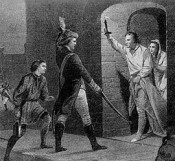 In this final installment of our special series on the Founding Fathers Religion, we move to farmer, politician, and guerilla revolutionary leader Ethan Allen, who perhaps is best known for leading the Green Mountain Boys (and other fighters) in their raid and capture Fort Ticonderoga, a strategic victory which severely hampered communication between the northern and southern units of the British army. Like Thomas Jefferson and Benjamin Franklin, Ethan Allen might be best described as a Progressive Christian Deist who believed reason must take a paramount place in religious activity. The following passage is taken from…