29 Dec Spirituality & The Art of Living | New Thought Podcasts
New Thought Podcast Transcript: Welcome to the Inspirational Living podcast, creators of the new hardcover book, Evergreen: 50 Inspirational Life Lessons. Get motivated to begin your new year with a bright new attitude. Learn more at InspirationalLifeLessons.com. Today’s podcast has been edited and adapted from the book Message of New Thought by Abel Allen, published in 1914.
To know the art of living, we must know much of Nature. Until we catch its deeper meanings, until it kindles in us a sense of beauty, of order, of proportion and sublimity, the valuable ideals of life have evaded us. When we can recognize an intelligence behind the rose, possessing a spirit of sense and beauty; when we can discern the symmetry and proportion of the tree, the grandeur of the landscape, the splendor of the sunset, as the expression and handiwork of a divine intelligence, we recognize a kinship with the grass blade and flower and feel the touch of the universal soul.
A kinder impulse stirs our nature; the grosser things of life fade away; the finer instincts rule and govern our lives. Without these conceptions, how commonplace is life, how little Nature yields! We live in the midst of beauty and see it not; we are encompassed by music and hear it not. Life’s melodies are wasted on the unheeding soul. “See deep enough,” says Thomas Carlyle, “and you see musically; the heart of Nature being everywhere music.” We miss the value of Nature’s ideals; we reject her best gifts to humanity; we spurn her richest bounties; we enjoy only the common things of life.
Of all the enslavements, the most debasing is a slavery to dogmas, creeds, and institutions. After that, the most oppressive servitude is the tyranny of things, and a great many of us voluntarily bend our necks to its galling yoke. Things are the masters of the majority; things (not mind, not soul) are the controlling factors in life. The love of things overshadows the love of humanity.
We carry our gifts to the shrine of things. We bestow our care, our patience, and industry on things. Things monopolize thought; they dominate life. Things do have their value, but also their limitations. Their use and value must not be unduly minimized, neither must they be overvalued. Things are obedient servants, but harsh task-masters. They are good or bad according as they serve or as they master.
Beautiful things awaken beauty in the soul when it is attuned to beauty. When not so attuned, they awaken rather the feelings of vanity and display.
What we call “being civilized” is actually, in part, being a barbarian. We instinctively crave display; we assume the superior attitude; we love to dazzle with gaudy splendor. For want of riches within, we worship riches without. Lacking charms of soul, we love to charm with external splendor. We imitate royalty that employs pomp and circumstance to dazzle the multitude. We parade apparel and jewels for the same vulgar effect.
So many of us have not learned that externals cannot bring permanent satisfaction and content, that they are only for an hour and then pass away before the higher demands of the soul. When we have found the peace and serenity that come from within, that externals cannot give, then we have caught a glimpse of the art of living. When we have learned to be alone, but not lonely, isolated but not alone, to be content without luxury, tranquil in adversity, hopeful in defeat, then we have become master over things and know something of the art of living.
Many make possessions the chief purpose in life and mistakenly believe that these furnish the real basis of living. It is true that wealth gives opportunities, but how often does it blight the finer instincts and impulses of the soul. Gold sometimes develops a metallic quality in the soul, which rings only with the cold, unfeeling sound of the metal.
Some people use the dollar as the yardstick to measure life’s values. They do not discover the finer sensibilities or the real friendships of life. The dollar friendship vibrates only to the selfish touch. What do the worshipers of Midas know of the finer impulses of the soul, of the comradeship and riches of culture, of the joy of giving, of the peace of the tranquil soul? The soul is bankrupt in the presence of riches. The glitter of conventionality is as cold as the Arctic stream.
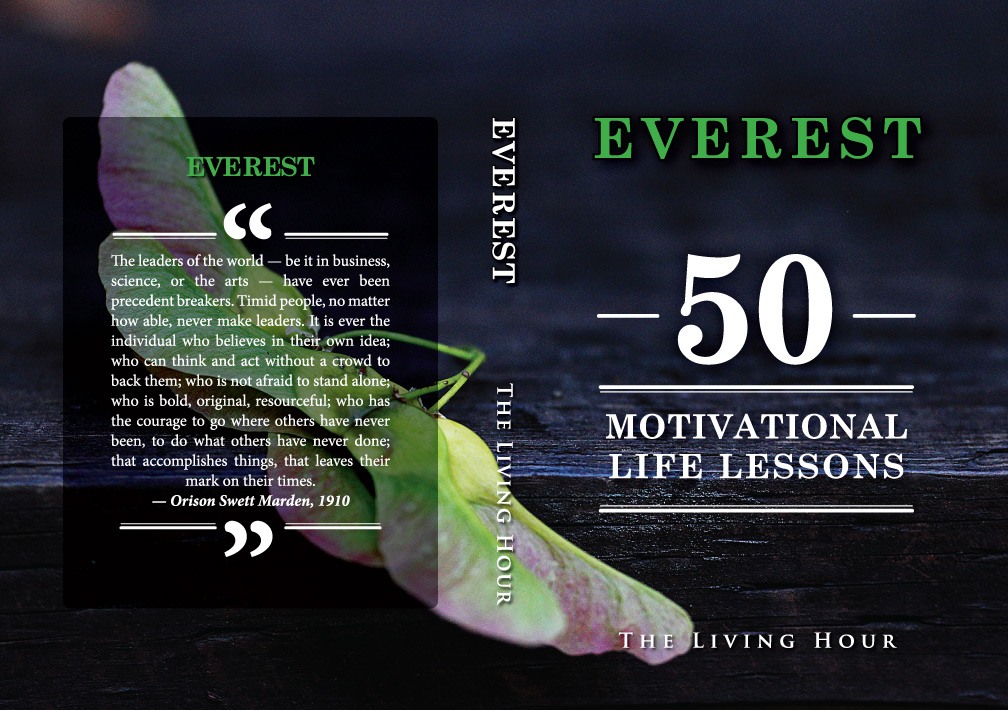
READ THE ENTIRE ESSAY IN EVEREST: 50 MOTIVATIONAL LIFE LESSONS